

Christy Walton vs Jerry Jones: Fortune & Legacy
In the ever-evolving landscape of American wealth, Christy Walton and Jerry Jones stand out as exemplars of two contrasting models of fortune creation and preservation. Christy Walton’s wealth is largely inherited, concentrated in a single global retail empire, and managed through family trusts and structured governance, making it highly sensitive to the performance of the underlying company, market fluctuations, and intergenerational dynamics. By contrast, Jerry Jones built his fortune through entrepreneurial ventures in energy before acquiring the iconic Dallas Cowboys, a franchise that functions simultaneously as a high-value operational asset, a global brand, and a vehicle for media and merchandising revenue. This analysis examines not only headline net worth but also the mechanics of asset concentration, liquidity, governance structures, succession planning, philanthropic influence, and public profile, highlighting how each billionaire navigates risk, opportunity, and legacy.
A modern milestone underscores the relevance of this comparison: the retailer associated with the Walton family crossed the $1 trillion market-cap threshold in early February 2026, dramatically affecting the family’s wealth estimates and illustrating the magnifying effect of concentrated equity positions. Meanwhile, the Cowboys exemplify how operational control, brand equity, and media exposure can drive immense but less liquid value. By framing these fortunes as multi-dimensional constructs—combining equity signals, brand assets, governance networks, and influence vectors—this piece provides a comprehensive, data-driven, and practical perspective for investors, analysts, civic leaders, and publishers interested in understanding the structure, dynamics, and long-term implications of American billionaire wealth.
Quick summary
- Christy Walton represents a generational retail fortune: the majority of the wealth vector projects onto a single high-cap public equity axis (the retailer), with secondary projections into trusts, private investments, and philanthropic endowments. The time-series variance of this vector is dominated by market-cap movements of the retailer and structural family-office constraints.
- Jerry Jones built entrepreneurial wealth in energy and later amplified it through ownership and operational control of a highly visible sports franchise (the Dallas Cowboys). The Cowboys themselves act as a brand-token with large valuation multipliers tied to media-rights, sponsorship flows, and stadium-related revenue.
- A modern, networked inflection point: the retailer tied to the Walton family passed a $1 trillion market-cap milestone in early February 2026 — a discrete jump in the market-cap feature that materially increases headline wealth estimates for family stakeholders indexed to that equity.
Top-line facts & 2026 estimates
| Metric | Walton heir | Cowboys owner (Jerry Jones) |
| Reported 2026 / early-2026 net worth (estimate) | Multi-$B; values fluctuate with retailer equity and can be observed on live wealth trackers (snapshot varies by day). | ~$19–20B (owner net-worth trackers typically list Jerry Jones near this level; the team is the dominant asset). |
| Single largest asset | Concentrated position in the retail company’s publicly traded equity | Dallas Cowboys (team valuation ~$13B in 2026) plus energy holdings |
| Liquidity | Liquid public equity (but concentrated and often encumbered by trusts) | Illiquid team equity; corporate cash flows and other assets provide operational liquidity |
| Public profile | Low-to-moderate, largely institutional | Very high: constant media coverage and league-facing visibility |
| Philanthropy | Institutional grants, foundations | Visible civic philanthropy tied to the team/stadium |
| Primary risk | Company-specific market swings and governance concentration | Brand/reputation shocks, sports cycles, labor disputes |

How they made and hold their wealth interpreted as data provenance
The Walton-linked model concentrated equity + trust encodings
From an NLP/knowledge-graph perspective, the Walton-linked fortune is a star-shaped subgraph: many individual nodes (Family Members, trusts) connect back to a single central node — the retailer. The weight on the central edge (equity ownership) explains most variance in household net worth.
Mechanics
- The equity holding is a public signal: easy to observe, high information content, canonical pricing from exchanges.
- But there are governance edges (trust agreements, family councils) that limit the actionability of the equity; those edges act like regularizers in optimization — they prevent unconstrained selling and thus dampen short-term liquidity despite the public market’s presence.
Implication
- Long-term compound upside is high if the retailer performs; downside is heavily correlated with retailer-specific shocks — regulatory, competitive, or platform disruption.
The Jones model entrepreneur + operating franchise as an operational graph
The Jones fortune looks like a hub-and-spoke structure centered on an operational asset: the NFL franchise. The franchise is both a revenue generator and a brand amplifier; it changes the topology of influence (media edges, civic edges, merchandising edges).
Mechanics
- The franchise valuation is estimated via private-market valuation frameworks (revenue multiples, media-rights discounting, brand-implied valuation). There’s no exchange price; valuation is model-derived.
- Liquidity requires either selling minority stakes (rare), using stadium revenue as collateral, or monetizing via media and brand deals.
Implication
- Team valuations can accelerate rapidly with big media-rights deals or global merchandising push, but are harder to convert into cash without strategic transactions or complex financing.
Asset maps: retail vs. sports & energy
Walton-style asset map
- Primary axis (public equity): Large % of Net Worth concentrated in public retailer shares — high market-cap, high liquidity if selling friction absent.
- Secondary axis (private allocations): Family office holdings, private equity, venture positions.
- Control & governance: Trusts, boards, and family councils; multi-node control reduces single-person risk but creates intergenerational governance complexity.
Data insight
- When the retailer’s market-cap increases (e.g., a $1T milestone), the principal component along that axis dominates the covariance matrix, lifting correlated wealth estimates across heirs.
Jones-family asset map
- Primary axis (franchise brand): The team — large valuation with brand premiums.
- Secondary axes: Energy holdings, real-estate development (stadium investments), licensing/merchandising.
- Control & governance: Centralized owner-operator model, quick decision-making, but high idiosyncratic exposure to owner reputation.
Data insight
- Team value is an inferred latent variable derived from revenue forecasts, brand salience metrics, and comparables (Forbes valuations). Its distribution is wider and fatter-tailed due to infrequent but large re-valuations at sale or rights-cycle events.
Governance & succession network dynamics and transfer risk
Walton-style governance: distributed, institutional
- Graph topology: Many nodes (heirs), multiple edges (trust instruments, boards).
- Pros: Distributed decision-making reduces single-leader failure modes.
- Cons: Coordination costs, potential for branch splits, and fragmentation over generations (the “node-splitting problem”).
- Succession modeled as a stochastic process: Over n generations, probability of fractionalization increases — this can reduce per-heir control and raise transaction costs.
Franchise governance: centralized & public
- Graph topology: A dominant central node (owner) with high-degree edges into league, sponsors, and fans.
- Pros: Decisive Leadership, faster operational pivots.
- Cons: Concentration risk — if the central node experiences reputational shock, the entire graph’s edge weights can reconfigure rapidly.
- Transfer mechanics: Sale requires league approval (an external constraint), fan/sponsor reactions, and practical valuation negotiation — more friction than purely financial transfers.
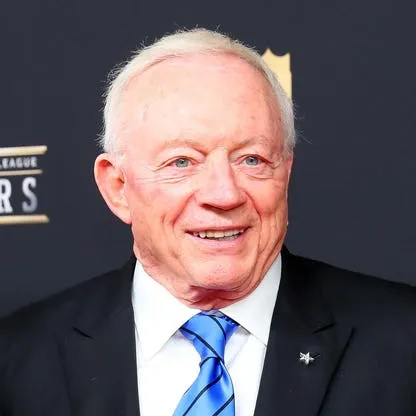
Philanthropy and public influence — attention-weighted giving
Walton heir — institutional, low-attention giving
- Typical mechanism: foundations that provide programmatic grants.
- Influence vector is long-tail: funding institutions with persistent budgets, shaping research, education, and conservation over decades.
- Visibility is lower, but institutional influence in policy and academia can be profound (high leverage per dollar over time).
Jones family — visible, civic boosterism
- Philanthropy tied to local community, stadium projects, and public-facing programs.
- Influence vector is high-attention short-term: donations generate immediate media coverage and local goodwill, often linked to civic deals.
- Philanthropic actions often interplay with stadium financing and municipal negotiation matrices.
Head-to-head risk & opportunity comparison
We compare the two models using scenario-conditioned expected outcomes (E[ΔNetWorth | scenario]) and tail-risk assessments.
Extended retail bull market
- Assumption: Retailer benefits from sustained e-commerce Growth and international expansion; market-cap increases by X%.
- Walton vector: E[ΔW] large positive; tail risk low-to-moderate unless regulatory shock emerges.
- Jones vector: modest gain via correlated consumer-spending increase but limited exposure.
Media-rights explosion for NFL
- Assumption: New global streaming deals triple media rights value.
- Jones vector: E[ΔJ] significant positive through direct multiple expansion of team value.
- Walton vector: Relatively muted impact.
Reputational shock to team owner (legal, political, or player scandal)
- Jones vector: Large negative tail, liquidity constraints due to illiquidity of team sale; sponsor downgrades possible.
- Walton vector: Low direct contagion but market-wide risk might cause correlated equity drops.
Retail regulatory crackdown
- Walton vector: Large negative move; fragmentation risk increases; family governance friction surfaces.
- Jones vector: Indirect impact via consumer sentiment, but team value may be somewhat insulated.
Timeline & milestone event tokens
Walton-linked timeline tokens
- Founding & growth of the retail company (multi-decade compounding)
- IPO / public listing and long-term returns
- Expansion of family foundations & charitable endowments
- Market-cap inflection — retailer reaches $1T (early Feb 2026) — a discrete token raising headline net worth estimates
Jones timeline tokens
- Entrepreneurial successes and energy investments (pre-1989)
- 1989 purchase of the Dallas Cowboys for $150M (transformational ownership)
- Stadium projects, expanded media & merchandising, repeated top valuations (~$13B by 2026)

FAQs
A: It depends on how you count. Public trackers list both as multi-billionaires. Christy Walton’s wealth largely tracks the retailer’s stock; Jerry Jones’s wealth is heavily driven by the Dallas Cowboys’ valuation (~$13B in 2026). Direct head-to-head numbers vary day to day.
A: Neither is universally “safer.” Retail equity is liquid but concentrated; team ownership is valuable but illiquid and brand-sensitive. “Safety” depends on time horizon and the shock you worry about.
A: Selling is possible but usually constrained by governance, tax, and market-impact concerns. Trusts and family agreements also matter.
A: Yes — teams are sold — but league approval, fan and sponsor reaction, and family willingness make it complex. Historically, team sales are rare and major events.
Head-to-head summary table
| Feature | Walton heir (encoded) | Jerry Jones & family (encoded) |
| Net worth driver | Public retailer equity (primary component) | Team valuation + energy (primary components) |
| Liquidity | Sellable public stock (subject to trust rules) | Illiquid team equity; other cashflow sources |
| Control | Distributed family governance, board influence | Direct, operational control |
| Public influence | Institutional grants, behind-the-scenes | High-profile civic & media presence |
| Succession model | Trusts & family office governance | Familial/operational handover, high public scrutiny |
| Risk profile | Concentration risk, retail secular trends | Brand/reputation, sports cycles, media contract risk |
Conclusion
Christy Walton and Jerry Jones represent two very different paths to billionaire wealth. Walton’s fortune is generational, concentrated in a single global retailer, and shaped by trusts, governance, and institutional philanthropy, offering long-term growth but carrying concentration and succession risks. Jones’ wealth is entrepreneurial and operational, centered on the Dallas Cowboys, with value driven by media, merchandising, and brand exposure, providing growth and influence but limited liquidity and reputational risk.
Both models have unique strengths: Walton excels in stability and intergenerational wealth preservation, while Jones thrives on brand amplification and public visibility. Milestones like the retailer reaching a $1 trillion market cap and the enduring value of the Cowboys illustrate how these fortunes grow differently. Ultimately, this comparison highlights how wealth is built, maintained, and leveraged for influence and Legacy, offering lessons in risk, asset concentration, and societal impact.