
Introduction
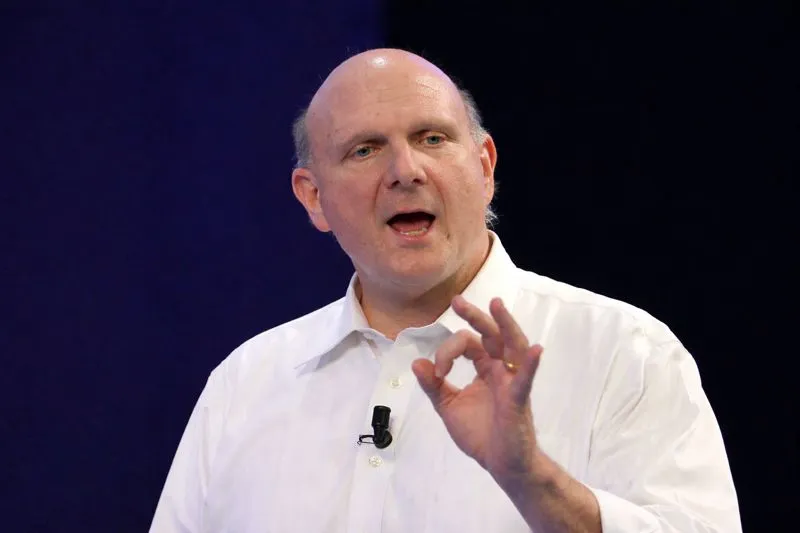
Steve Ballmer is one of technology’s most loud and energetic leaders. He helped turn Microsoft from a small software firm into a giant company that runs on millions of computers around the world. As Microsoft CEO (2000–2014), Ballmer focused on sales, operations, and enterprise customers. After leaving Microsoft, he bought the LA Clippers, started big philanthropic projects like the Ballmer Group, and created the civic-data site USA Facts.
Quick Facts
- Full name: Steven Anthony Ballmer.
- Date of birth: March 24, 1956 (Age in 2025: 69).
- Birthplace: Detroit, Michigan, U.S.
- Education: Harvard University B.A. in Mathematics & Economics (1977); briefly attended Stanford Graduate School of Business.
- Joined Microsoft: June 11, 1980 (early employee).
- Microsoft CEO: 2000–2014.
- LA Clippers owner: Purchased team in 2014 (approx. $2 billion).
- Philanthropy: Co-founded Ballmer Group (2015); funded and launched USAFacts (2017).
- Net worth (2025): Common estimates place Ballmer in the ~$150–160+ billion range (varies with markets).
Childhood & Early Life
Steve Ballmer grew up near Detroit, Michigan. He liked numbers and thinking about business even as a kid. He won a scholarship to Harvard, where he studied mathematics and economics. At Harvard he met Bill Gates; they became close friends and roommates. That friendship shaped much of his life and career.
After Harvard, Ballmer worked for a short time at Procter & Gamble. He later enrolled at Stanford for graduate school but left early to join Microsoft in 1980 because the company offered a rare chance to grow fast in a new industry.
Joining Microsoft The Early Years (1980s)
Ballmer joined Microsoft on June 11, 1980 as one of the first business-side employees. He helped build the company’s sales, operations, and financial systems. In the 1980s and 1990s his work focused on deals with PC makers and corporate customers. Those efforts helped make Windows and Office standard software in many companies.
Why this mattered: Ballmer built the systems that turned software into predictable revenue. That predictable revenue meant Microsoft could invest in new products and weather tech industry cycles.
The CEO Era: 2000–2014 Scale, Execution, Trade-offs
When Ballmer became Microsoft CEO (2000–2014) the tech world was shifting fast. His main priorities were:
- Scaling sales and enterprise licensing (selling to companies and governments).
- Defending and growing Windows and Office Microsoft’s core cash machines.
- Expanding server and business software (Windows Server, SQL Server, Exchange).
- Entering consumer hardware and services (including Xbox for gaming; later mobile bets such as Windows Phone and Nokia).
Under Ballmer, Microsoft grew into a reliable revenue-generating company. The firm became huge and produced massive cash flows. But the strong focus on enterprise stability made the company slower to move into some consumer trends notably smartphones and mobile ecosystems where rivals like Apple and Google grew fast.
Key outcomes: strong enterprise position, big cash flows, and mixed consumer results.
Major Works & Achievements
1. Scale of Windows & Office
Ballmer protected and grew Windows and Office, products that powered Businesses Worldwide and created a huge, stable revenue base.
2. Enterprise software expansion
He invested in server and enterprise tools that made Microsoft core to many companies’ IT stacks.
3. Xbox and gaming
Under Ballmer, Microsoft worked to make Xbox a major gaming platform and brand. Xbox became a serious consumer business, with hardware, software, studios, and live services.
4. LA Clippers purchase
In 2014 Ballmer bought the LA Clippers for around $2 billion, becoming a high-profile NBA owner.
5. Ballmer Group & USA Facts
After Microsoft, Ballmer and his wife Connie formed the Ballmer Group in 2015 to focus on economic mobility for children and families. In 2017 Ballmer launched USA Facts, a non-profit civic-data site that displays government spending and outcomes clearly and without political spin.
Missed Opportunities & Controversies A Balanced Look
No leader is perfect. Ballmer had major wins and also clear misses.
Major misses
- Mobile: Microsoft missed the mobile platform wave. Windows Phone and the acquisition of Nokia’s handset business did not create a lasting competitor to iOS and Android.
- Search & consumer services: Bing gained some market but did not overtake the market leader. Many consumer-facing moves lagged.
- Public image: Ballmer’s loud, high-energy persona created memorable viral moments (like the “Developers! Developers!” chant), which inspired employees but also became an easy target for critics.
Why the misses matter: focusing on enterprise customers created stability but made it harder to pivot fast when the world moved to mobile and cloud-native consumer-first services.
Post-Microsoft: Sports, Philanthropy & Civic Data
After stepping down in 2014, Ballmer focused on three big areas:
1. LA Clippers
Ballmer became deeply involved with the Clippers, investing in the team, facilities, and community engagement.
2. Ballmer Group
Founded in 2015, the Ballmer Group funds programs that aim to improve economic mobility through measurable outcomes, often emphasizing data and scale.
3. USA Facts
Launched in 2017, USA Facts aggregates public data on government spending and outcomes so citizens can understand facts without political filters.
Net Worth 2025 Snapshot
Steve Ballmer is consistently ranked among the world’s richest people. In 2025, estimates commonly place his net worth around $150–160+ billion, though this changes daily with the stock market. Most of his wealth derives from Microsoft shares, supplemented by other investments and the value of the Clippers franchise.
If you publish this on a site, use a live net-worth widget (like Forbes Real-Time Billionaires) to keep the figure current.
Leadership Style What Makes Ballmer Tick
Ballmer’s leadership is known for being energetic, operational, and execution-focused. Core elements include:
- High energy & visible leadership: Ballmer used passion and loud pep talks to mobilize teams.
- Execution focus: He emphasized systems, metrics, and getting things done.
- Customer-first for paying customers: He prioritized enterprise clients who pay and produce predictable revenue.
- Willingness to spend: Ballmer backed large investments in R&D and acquisitions when he believed they mattered.
- Later reflection: After leaving Microsoft, Ballmer reflected publicly on what worked and what didn’t notably mobile strategy mistakes.
Actionable Leadership Lessons
- Obsess about customers who pay. Prioritize users who create predictable revenue.
- Hire for execution. Look for people who deliver projects on time and reliably.
- Measure results. Use data and KPIs to decide what works.
- Protect what works. Defend your core business while you experiment.
- Accept trade-offs. Focus in one area may mean losing ground in another.
- Build distribution moats. Partnerships and channels can be as powerful as product features.
- Keep high energy. A leader’s energy can boost team morale but use it wisely.
- Invest in systems. Processes and infrastructure let big organizations act predictably.
- Use wealth to build institutions. Philanthropy and civic projects can scale long-term change.
- Reflect and adapt. Constant learning helps correct past mistakes.
These are practical steps for start-ups and teams inside larger companies.
Timelines & Milestones
| Year | Milestone |
| 1956 | Born March 24 in Detroit, Michigan. |
| 1977 | I graduated from Harvard (Mathematics & Economics). |
| 1980 | Joined Microsoft (June 11). |
| 2000 | Became CEO of Microsoft. |
| 2008–2013 | Invested in Xbox, server products; struggled in mobile. |
| 2014 | Stepped down as CEO; bought LA Clippers (~$2B). |
| 2015 | Launched Ballmer Group (philanthropy). |
| 2017 | Launched USA Facts (civic data). |
| 2020–2025 | Continued philanthropy, Clippers ownership, public commentary. |
Wins vs Misses Clear Comparison Table
| Area | Wins | Misses |
| Enterprise software | Built strong Office & server revenues. | Focus on enterprise slowed consumer pivots. |
| Cloud foundation | R&D investments seeded later cloud growth. | Slow to fully adopt cloud-first consumer strategy early. |
| Consumer hardware | Xbox became a major platform. | Windows Phone / Nokia acquisition failed to win mobile. |
| Public image | Energetic leader who inspired many. | Some public moments became mocks for critics. |
Pros & Cons
Pros
- Built Microsoft into a stable enterprise leader.
- Long-term shareholder alignment due to his Microsoft stake.
- Large-scale philanthropy and civic-data work (Ballmer Group, USA Facts).
Cons
- Missed early mobile platforms and ecosystems.
- Intense public style sometimes drew criticism.

FAQs
A: He served as Microsoft’s CEO from 2000 to 2014.
A: Net worth estimates change daily with equity markets. Forbes’ real-time billionaire tracker places Ballmer among the richest people globally with an estimated net worth in the roughly $150–160+ billion range in 2025; use a dynamic feed for the exact figure.
A: Ballmer Group (co-founded with Connie Ballmer) is a philanthropic organization focused on economic mobility and opportunity. USA Facts is a nonpartisan civic-data website Ballmer funded to make government spending and outcomes easier to understand.
A: Yes Ballmer has remained a major individual shareholder of Microsoft and has publicly discussed near-decisions to sell large portions of his holdings after leaving, decisions he ultimately did not take. Public filings and interviews show he kept a large stake.
Conclusion
Steve Ballmer is a story of execution, scale, and trade-offs. As Microsoft CEO (2000–2014) he built the operations and sales systems that turned software into a reliable source of revenue for millions of organizations. Those systems allowed Microsoft to fund later transformations (like cloud growth), but they also meant slower moves into consumer platform shifts such as mobile. After Microsoft, Ballmer used his wealth to buy the LA Clippers, start major philanthropic work with Ballmer Group, and launch USA Facts. Whether you admire his energy or critique his misses, Ballmer’s career offers clear lessons about Leadership in big organizations.