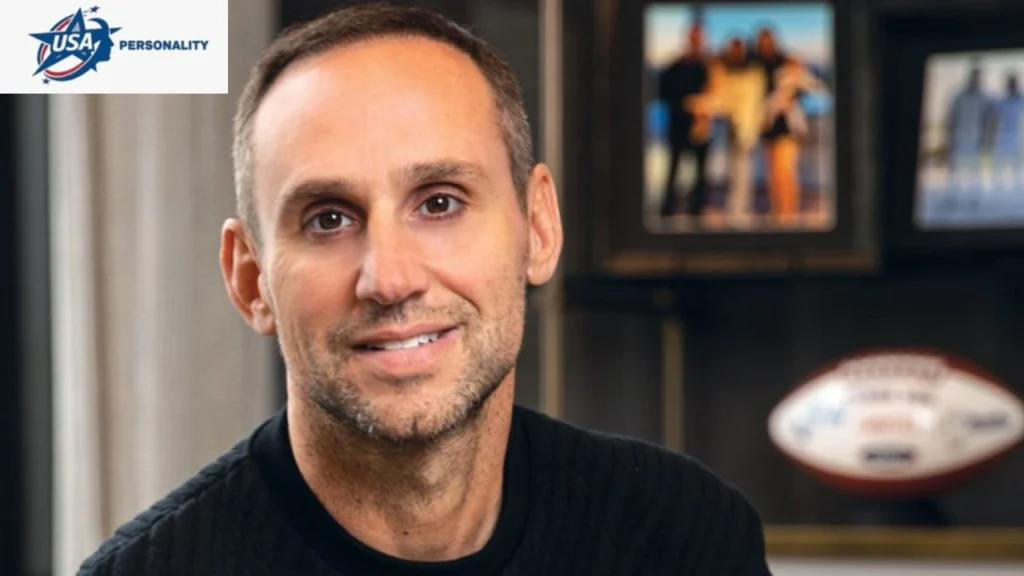
Michael Rubin & Fanatics’ $25B Rise
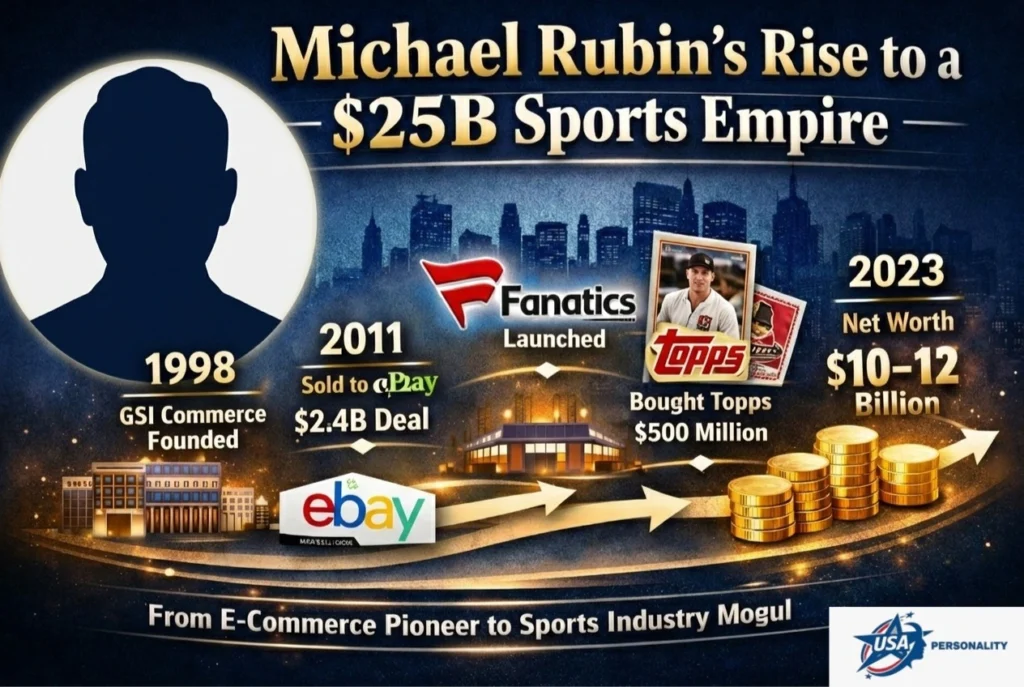
Michael Rubin ranks among the leading voices in contemporary sports business, crafting a multi-billion-dollar network that redefined how supporters purchase, gather, and interact with their preferred teams. As the creator and chief executive of Fanatics, Rubin converted licensed team goods from a scattered sales segment into a fully controlled giant covering clothing production, online consumer sales, venue shops, trading cards, memorabilia, and sports gambling. What started from his prior triumph with GSI Commerce grew into a broader vision: dominating every stage of fan devotion — ranging from team jerseys to exclusive-edition cards to live betting options. The 2022 purchase of Topps represented a major shift, granting Fanatics control over one of the most legendary names in the collecting world and greatly widening its presence in profitable enthusiast categories.
Currently, with company valuations climbing into the tens of billions and Rubin’s reported personal wealth falling between $10–12 billion during 2024–26, Fanatics sits at the heart of sports retail unification. Still, swift growth has also triggered lawsuits from rivals such as Panini and rising oversight from regulators, especially within the wagering area. Grasping Michael Rubin’s ascent involves recognizing how the entire industry of sports enthusiasm is being rebuilt and identifying where future expansion or challenges might surface.
Quick snapshot
| Item | Detail |
| Name | Michael Gary Rubin |
| Born | July 21, 1972 |
| Main company | Fanatics, Inc. (founder & CEO) |
| Breakout sale | GSI Commerce transaction with eBay assets (2011) |
| Big acquisition | Topps trading-card & collectibles business (Jan 2022) ~$500M |
| Major funding | $700M round (Dec 2022) valuing Fanatics at ~$31B |
| Estimated net worth (2024–26) | Roughly $10–12B (largely tied to Fanatics stake) |
| Core verticals | Licensed retail, trading-cards/collectibles, betting & gaming, stadium retail |
| Big risk | Legal/antitrust fights (Panini), betting regulation, and capital intensity |
Overview: transforming a biography into an NLP analogy
Read this piece as both a conventional corporate profile and an NLP-style model of how Michael Rubin and Fanatics operate. Imagine businesses, deals, and legal fights represented as tokens, embeddings, and architectural choices in a large model of the sports-economy domain. That framing helps you see patterns: which signals Rubin prioritized (licensing, manufacturing control, cross-channel distribution), what the vector-space of risk looks like (regulation, competition, capital) and how Fanatics’ moves shift the semantic neighborhood for collectors, leagues, and investors.
This is written plainly a 15-year-old should be able to follow but with an NLP overlay so you can think like a strategist: if Fanatics is a model, what are its weights and which inputs change its outputs most?
Childhood & early hustle tokenization of ambition
Rubin’s entrepreneurial pattern started early
- Age 12: Ski-tuning Business in his parents’ basement.
- Age 14: Used bar-mitzvah money to open a ski shop.
- College: Briefly attended Villanova University, then left to run businesses full-time.
In NLP-speak: Rubin was performing early tokenization and micro-batching small experiments generating local gradients (profit, customer feedback) that allowed him to iterate product-market fit repeatedly. Those early successes formed a parameter initialization that favored scaling logistics and fulfillment skills that later optimized Fanatics’ loss function: faster production + better availability = higher conversion.
GSI Commerce was the first big win
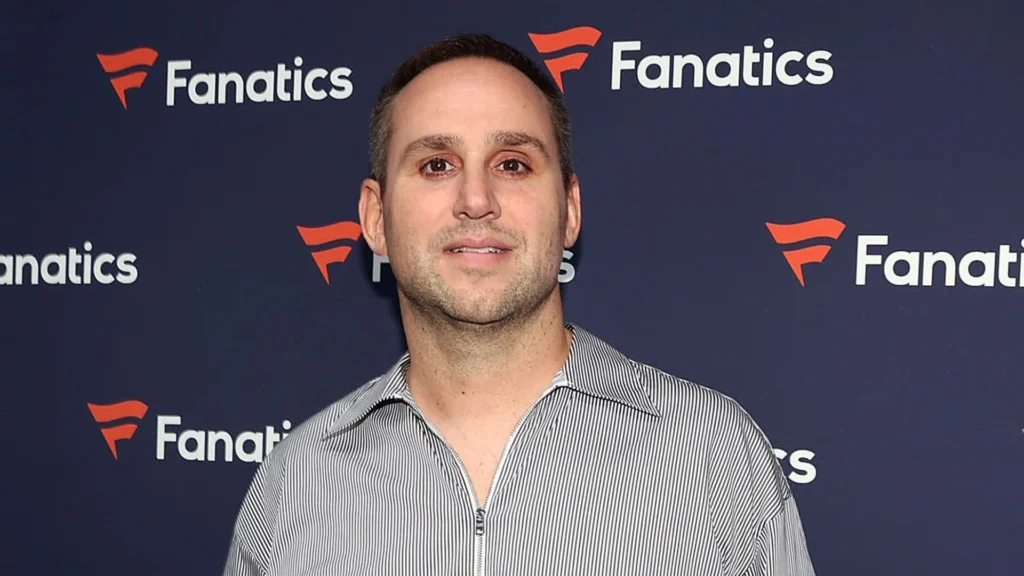
In 1998 Rubin founded GSI Commerce, an e-commerce and fulfillment company that operated like a verticalized inference engine for retail. GSI provided end-to-end services storefronts, fulfillment, and logistics — for big brands. That work was essentially pretraining on enterprise-class e-commerce: operational data, fulfillment optimization, contract negotiation with licensors.
The 2011 sale of GSI assets to eBay (a liquidity event tied to roughly $2.4B in related transactions) was the equivalent of a transfer-learning windfall capital and credibility Rubin reused to seed future architectures. The operational DNA and relationships from GSI became the initialization for Fanatics’ weights.
Founding and scaling Fanatics: transfer learning to a fan-focused model
Fanatics took those logistics and licensing skills and reoriented them around sports fandom. Key moves:
- Lock down licenses with leagues and players’ associations.
- Control manufacturing and speed to market get player-specific gear to fans quickly.
- Combine direct-to-consumer with venue retail (stadiums, arenas).
- Expand into adjacent high-LTV verticals: trading cards, collectibles, betting.
In model terms: Fanatics shifted from a single-task model (fulfillment) to a multi-task, multi-modal model where each vertical provides cross-modal signals that strengthen the whole — cards engage hardcore collectors, stadium kiosks capture impulse buyers, and betting can monetize engagement in real time.
The strategic playbook has three architectural pillars
Fanatics’ growth strategy can be broken down into three dominant attention heads that collectively shaped the company’s outputs.
Pillar Licensing & manufacturing (attention to privileged tokens)
Fanatics pursued long-term exclusive or preferred licenses with the NFL, MLB, NBA, colleges, and others. Licensing secured privileged tokens (authorized merchandise) that carry higher margin and Consumer Trust. Controlling manufacturing means Fanatics can tune scarcity and speed akin to controlling hyperparameters that influence product desirability.
Why this matters: exclusive licensing reduces data noise from counterfeit or gray-market sellers and allows the company to condition demand signals on official product availability.
Pillar Direct-to-consumer + venue retail
Fanatics integrated online channels with stadium presence. That creates synchronous data flows fans who buy a jersey at a kiosk can be targeted online the next day with cards, digital drops, or betting promotions. It’s a closed feedback loop where transactions become supervised labels that help the system predict future purchases.
Pillar Collectibles & trading cards
Trading cards are high-LTV tokens. Hobbyists are highly engaged and respond to rarity, provenance, and authenticity attributes that are analogous to high-dimensional features in an embedding space. By owning Topps (an iconic brand), Fanatics gained direct control over these tokens, their distribution, and the associated metadata (player likeness rights, print runs, serial numbers).
Topps: why the card deal changed everything
In January 2022 Fanatics acquired the trading-card and collectibles business of Topps for roughly $500M. That acquisition was a major weight update to Fanatics’ model.
Key advantages
- Brand credibility: Topps is a trusted label in collector spaces a valuable prior that reduces buyer hesitation.
- Supply chain control: Fanatics could manage card production and distribution, aligning scarcity and drops with marketing signals.
- Cross-sell potential: Combine stadium presence and Fanatics’ D2C channels with Topps’ collector base for coordinated product drops and digital tie-ins.
Risks and friction
- Industry backlash: Collectors, hobby shops, and rival firms saw the move as consolidation. That increases the chance regulators or competitors will push back.
- Operational scaling: Producing top-quality, limited-run collector products at higher volumes risks quality dip a model overfit could irritate core fans.
- Access concerns: Centralizing production may change secondary market dynamics and distribution fairness for small hobby retailers.
Fanatics and the betting pivot logic, path, and risks
The logic
Betting is an adjacent modality with high engagement and recurring transactions. If Fanatics already Captures Fan attention through gear and cards, adding betting is analogous to adding a recurrent output layer that monetizes event-driven attention spikes.
The path
Fanatics built partnerships, rolled out stadium sportsbooks, and invested capital to expand product development and M&A. The $700M raise in December 2022 was explicitly aimed at scaling these initiatives and shoring up liquidity for market-making requirements.
The risks
- Regulation: Betting is a patchwork of state-level regulations in the U.S. and complex international rules. Compliance is expensive and noisy.
- Capital intensive: Sportsbooks require liquidity and risk capital. This raises the cash burn and increases sensitivity to profit-margin fluctuations.
- Reputational integrity: Leagues are partners but also custodians of the sport’s integrity. Combining merchandise and betting raises conflicts-of-interest that attract scrutiny.
- Time-to-profitability: Betting often requires long-term customer acquisition cost amortization; profitability can be years out.
Bottom line: betting extends Fanatics’ model into high-frequency, high-variance outputs. If the company gets the risk controls and regulatory playbook right, it multiplies revenue; if not, it can destabilize valuations.
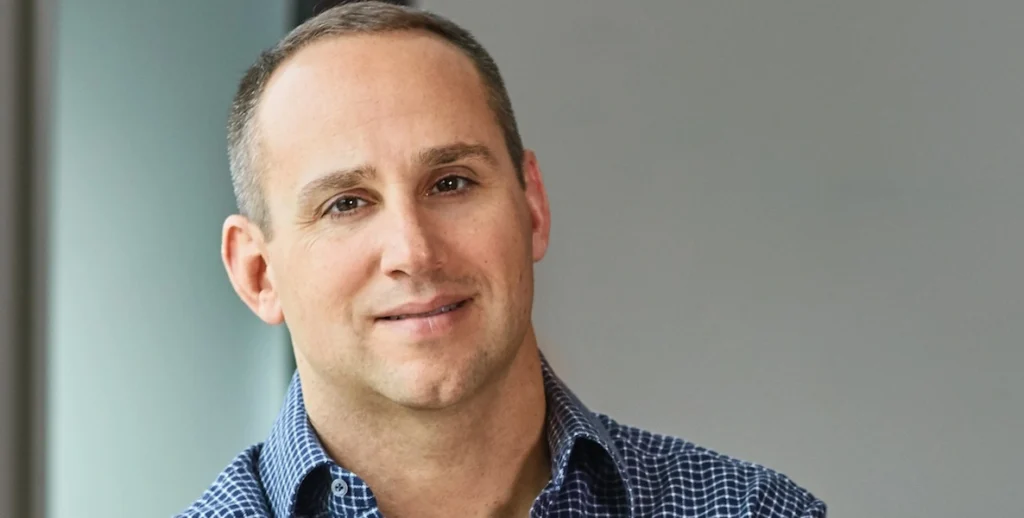
Money: funding, valuations, and Michael Rubin’s net worth
Key funding moments
- 2011: GSI transaction major liquidity for Rubin and team.
- 2021: Multiple funding rounds as Fanatics’ valuation climbed.
- Dec 2022: $700M funding round led by Clearlake valuing Fanatics at roughly $31B.
How net worth is estimated
Rubin’s net worth is heavily tied to his Fanatics ownership stake. Public and private reporting suggested he held a substantial minority stake (estimates have varied). If Fanatics is valued in the high tens of billions, Rubin’s stake plus prior liquidity from GSI explains widely cited net-worth estimates in the ~$10–12B range for 2024–26. Private valuation volatility and dilution events make precise numbers speculative.
Legal fights, competitors, and antitrust risks
The core conflict
Rivals like Panini have accused Fanatics of anti-competitive conduct: aggressive exclusive deals, hiring key talent, and acquiring printing capacity moves that could constrain rivals. These are high-stakes claims because they could reshape market structure in a hobby worth billions.
Why regulators care
- Market concentration: Control of licensing, production, and distribution is similar to controlling both model training data and the inference engine regulators worry this could reduce choice and harm consumers.
- Competition law: Exclusive deals and alleged interference may trigger antitrust scrutiny, with remedies that change how licensing can be structured.
- Consumer harm: Fewer producers could mean less variety, higher prices, or lower product quality in the long term.
What to watch
- Legal results in disputes involving Fanatics and competitors.
- Government investigations or settlement agreements restricting exclusive deals or mandating asset sales.
- Changes in resale-market values along with responses from hobby-store owners.
What this means for fans, investors, and hobby shops
- Supporters and hobbyists: Anticipate greater blending of online and real-world fan moments (exclusive releases, linked marketplaces), while keeping watch on stock levels and value shifts at local collectible stores.
- Independent collectible shops: Confront challenges if supply channels consolidate. Ways to endure: strengthen local connections, organize gatherings, offer verification plus grading expertise, and specialize in hard-to-find items.
- Financial backers: Fanatics represents a wager on full-chain control and deeper fan spending. Track lawsuit dangers, income breakdown across stores/cards/gambling, and funding requirements.
- Sports organizations and players: Immediate licensing income appeals strongly; extended concerns about image from gambling links call for thoughtful oversight.
Four possible futures for Fanatics
- The Win: Fanatics weathers legal risks, betting becomes profitable, collectibles scale worldwide valuation rises and Rubin’s stake retains or increases value.
- The Correction: Antitrust rulings or regulatory limits force restructured licensing; betting margins disappoint valuation corrects, and Fanatics refocuses on core retail.
- The Partner/Sell: Fanatics sells or spins out capital-intensive units (e.g., betting arm) or partners with major gaming firms to reduce balance-sheet risk.
- The Regulated Plateau: Regulators limit exclusivity; Fanatics focuses on operational excellence, manufacturing efficiency, and product innovation without monopolistic expansion.
Which is most likely? That depends on legal outcomes, Fanatics’ ability to show profitable betting economics, and how the company manages relationships with leagues and retailers.
Investor & reporter checklist: KPI tokens to monitor
- Recent court submissions (Fanatics against Panini plus connected cases).
- Income breakdown: Apparel sales versus trading cards versus gambling operations.
- Fresh sole-rights deals revealed (NFL, MLB, NBA, NCAA).
- Funding rounds, cash-out occasions, or bond offerings.
- Venue retail plus sports-betting launches and state-level permissions granted.
- Shifts in collectible-store inventory along with aftermarket trading-card values.
FAQs
A: Michael Rubin is the founder and CEO of Fanatics, and the entrepreneur who previously built GSI Commerce. He is known for turning sports fandom into a business that spans merchandise, trading cards, and betting.
A: Estimates usually place his net worth between $10–12 billion in 2024–25, mostly from his Fanatics stake and past deals. Exact numbers vary because Fanatics is a private company and valuations change.
A: Yes. Fanatics bought Topps’ trading-card and collectibles business in January 2022 for about $500 million.
A: Betting is regulated differently in each U.S. state and in other countries. Fanatics must secure state permissions and follow strict rules for each market. This complexity is a major risk.
A: Yes rivals like Panini and others have filed suits alleging anti-competitive behavior after Fanatics’ moves into trading cards and licensing. These are ongoing and could materially affect market dynamics.
Conclusion
Michael Rubin built Fanatics by combining logistical excellence (the GSI playbook) with bold licensing and M&A. Buying Topps and moving into betting were aggressive parameter updates meant to expand the Company’s Capacity to monetize fandom across multiple modalities. These steps can yield big rewards — yet they also draw sharper regulatory focus and heighten lawsuit exposure. Whether you’re a supporter, hobbyist, or financial stakeholder, keep track of court documents, income breakdown, and Fanatics’ progress toward profitable gambling operations. The firm’s direction might redefine the selling of team apparel, trading cards, and sports bets for generations to come.